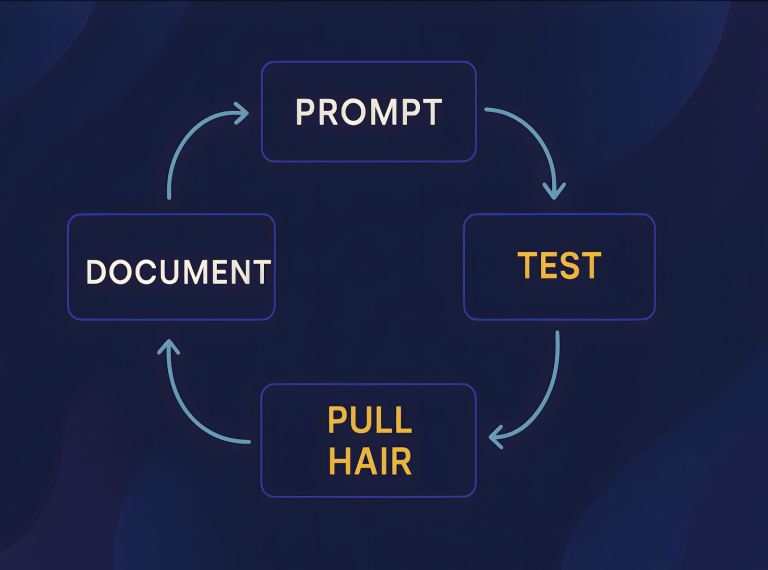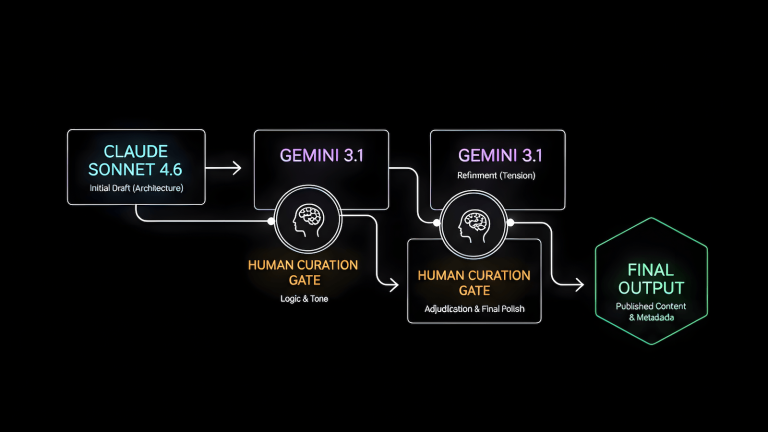
Most people trying to get better output from an LLM are solving the wrong problem. They rewrite the prompt. They try different phrasing. They add “think step by step” and hope something changes. The output improves slightly or not at all, and the cycle repeats. Context engineering breaks that cycle because it addresses the actual variable: not how you ask the question, but what information the model has access to before it generates an answer.
Context engineering for LLMs is the deliberate design of everything that enters the model’s context window, including system instructions, role definitions, retrieved documents, tool outputs, conversation history, and user-supplied variables. It is not a single prompt technique. It is the discipline of managing what the model sees so that its output is specific, reliable, and useful rather than statistically average.
What Prompt Engineering Actually Gets Wrong
Prompt engineering, as most people practice it, treats the model as a black box that responds to clever phrasing. Write a better instruction, get a better answer. That framing is not wrong exactly, but it is incomplete in ways that matter in production. The ceiling of prompt engineering is set by how much context the model is working with. A well-phrased prompt against an empty context window still produces generic output because the model has no domain knowledge, no constraints, no examples of what good looks like for your specific situation. It fills those gaps with training data averages. You get an average answer.
The model is not failing because it lacks intelligence. It is failing because it lacks information. Prompt engineering optimizes the question. Context engineering populates the knowledge the model needs to answer it correctly. These are different problems, and confusing them is why so many teams hit a wall with AI implementation after the initial demos go well.
What Context Engineering for LLMs Actually Covers
Context engineering is not one thing. It is a set of practices that all address the same root problem: the model only knows what you give it.
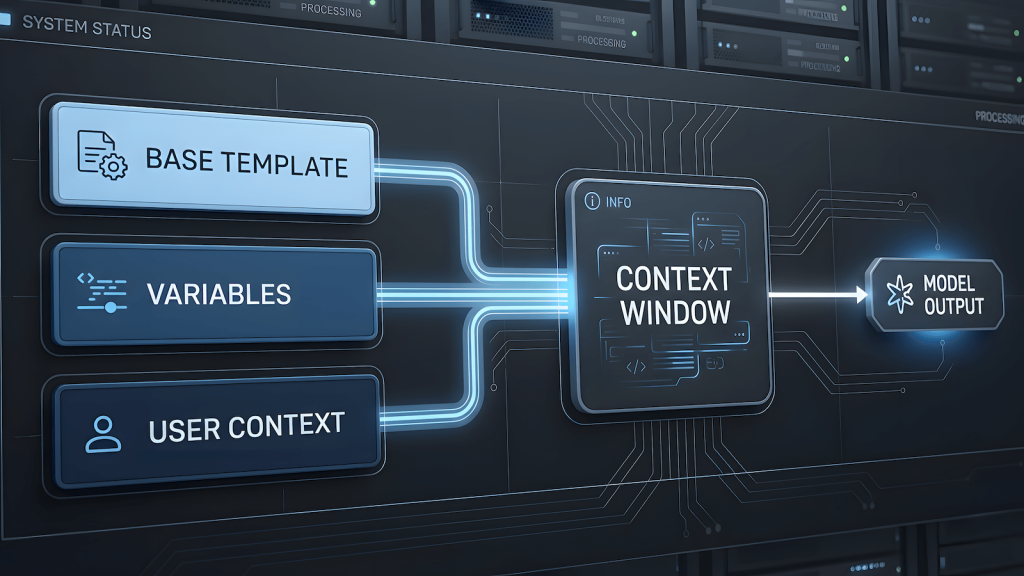
The base template is the structural backbone of any well-engineered context layer. It defines the role, the output format, the constraints, the quality bar, and the domain knowledge the model needs to reason correctly. This is where your expertise gets encoded. A base template written by someone with real operational experience in a domain is fundamentally different from one assembled from generic best practices. The model cannot distinguish between them on its own. The output can. The base template does not change per request. It is engineered once and trusted across every run.
Variables are the selectable parameters that differentiate one request from another within the same base template. In a QA context, that might be test type, framework, or target system layer. In a content workflow, it might be post format, site voice, and audience level. Variables slot into the template at defined positions and narrow the output from general to specific without requiring you to rewrite the entire system prompt for every use case.
User context is the runtime input that makes the output specific to this situation. A one-line description of the actual feature, scenario, or task being addressed. This is what closes the gap between a well-structured template and a response that is actually useful right now.
Understanding how models process and weight the information in a context window matters when you design these layers. The mechanics of how models handle competing instructions, how they prioritize recent versus earlier context, and how output format affects reasoning quality are all covered in the broader guide to LLM inference explained.
RAG Is Context Engineering
Retrieval-Augmented Generation is probably the most widely deployed form of context engineering, even if most teams do not frame it that way. RAG injects retrieved documents, knowledge base entries, or database records into the context window before the model generates a response. The model is not searching or accessing external data at inference time. It is reasoning from what you put in front of it. The retrieval step is your context engineering layer.
This framing matters because it clarifies what RAG actually fixes. The model’s built-in knowledge is static, bounded by training data, and often wrong about specifics. RAG replaces that limitation not by making the model smarter but by giving it the right information at the right moment. That is context engineering: designing what the model sees so it reasons correctly from it.
The same logic applies to tool outputs in agentic workflows. When a model calls a function and receives a result, that result enters the context window as structured data. How you format that data, how much of it you include, and where in the conversation it appears are all context engineering decisions. Poor formatting of tool outputs is one of the most common causes of agent failures that look like model failures. The model did not misunderstand the task. It was given context it could not reason from correctly.
Memory Systems Are a Context Engineering Problem
Long-running AI workflows hit a hard limit: the context window has a fixed size. Every token of conversation history, retrieved document, and tool output competes for the same space. Memory systems solve this by deciding what to persist, what to summarize, and what to discard between turns.
That decision is context engineering. You are designing which information the model carries forward and which it lets go. Summarization-based memory compresses earlier turns into a condensed representation and injects that summary at the start of each new context window. Vector-based memory retrieves relevant past interactions rather than including all of them. The choice between these approaches, and how you implement either one, directly shapes what the model knows at each step of a multi-turn workflow.
For anyone running local inference pipelines, memory management becomes a resource constraint as much as a design question. The practical limits of what fits in a context window at different quantization levels are covered in LLM quantization explained and the guide to VRAM requirements for running models locally.
Context Engineering in Agentic Workflows
Single-turn prompting is the simplest case of context engineering because there is only one context window to manage. Agentic workflows, where a model plans, calls tools, receives results, and iterates across multiple steps, multiply the complexity. Each step produces output that becomes input for the next step. The context window accumulates. Decisions made early about what to include and exclude shape everything downstream.
Context engineering in agentic systems means defining what the agent knows at step one, what it adds at each subsequent step, how it handles failed tool calls, and when it should summarize rather than carry full detail forward. These are software engineering decisions as much as AI decisions. The architecture of how you structure those pipelines matters as much as the quality of the model you are running. A practical example of how this plays out in a real local publishing workflow is documented in the n8n and Ollama local AI drafting pipeline.
The Practical Difference It Makes
Consider two versions of the same request to a QA-focused model.
Version A: “Write a regression test prompt for a login feature.”
Version B: System prompt establishing the tester role, output format constraints, and quality bar. Variable inputs specifying regression testing, mobile app, biometric plus OTP fallback path. User context: the login flow uses Face ID as primary and falls back to a six-digit OTP if biometric fails three times.
Version A produces a generic response. Version B produces something you can actually use because the model had everything it needed to reason correctly. The phrasing of the question is almost irrelevant. The context did the work.
This is the architecture behind the QA Prompt Builder at QAJourney. The base templates carry real operational QA knowledge. Variables handle test type, framework, and scope. User context provides the one-line feature description. The model assembles a ready-to-use prompt from the intersection of all three. That is context engineering in production.
What This Changes for How You Build
If you take context engineering seriously, it reframes several common AI implementation problems. Inconsistent output quality is usually a context design problem, not a model capability problem. Agents that fail on complex tasks are usually failing because of poor context accumulation across steps, not because the model is not smart enough. Fine-tuning feels necessary when it is often unnecessary if the base template carries enough domain knowledge.
The work is in the design of the context layer. Building a good base template takes longer than writing a prompt. Designing a memory system for an agentic workflow is a real engineering task. But that work compounds. A well-engineered context layer runs reliably across thousands of requests. A clever prompt runs until the use case changes slightly and breaks it. For teams serious about running AI in production, improving LLM inference speed and reliability starts with getting the context right before optimizing anything else.
Stop optimizing prompts. Start engineering context. The model will do its job correctly when you give it what it needs to work from. That is the entire discipline.