Funds got tight, so I dropped down a tier on Claude. Same tool, same account, less of everything. Search stopped happening automatically. Tool use I’d relied on quietly disappeared. It wasn’t that Claude stopped working. It was that Claude at a lower tier does noticeably less than Claude paid does, and that’s the part nobody warns you about. You don’t lose access. You lose capability, one function at a time, and you don’t always notice until you go looking for something that used to just happen.
That’s the moment this whole argument clicked for me. Not “I can’t afford Claude anymore.” Something sharper: the gate isn’t binary. It has floors.
The Impossible Fight
Here’s the trap. If you hold a local model, or a gatekept lower tier of a frontier model, to the standard of what paid Claude or paid ChatGPT produces, you will always end up back at the register. Every time. There’s no local setup, no clever prompt, no amount of patience that closes that gap completely, because the gap isn’t a bug you can route around. It’s the actual product difference between a model with a full budget behind it and one without.
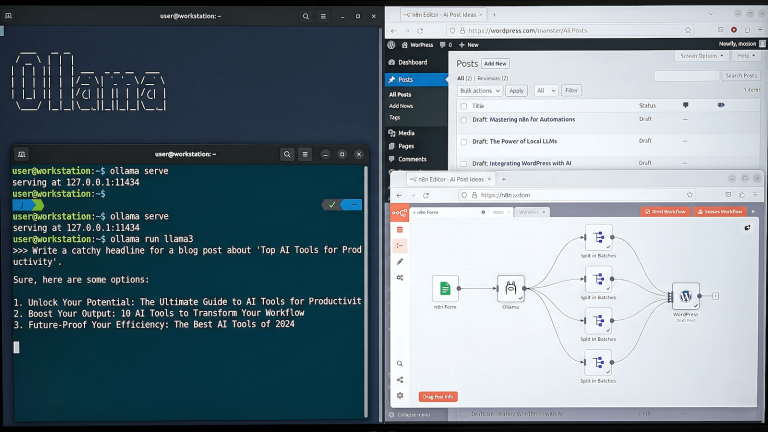
This is exactly why so many people have built their own tooling around Claude Code, Codex, and custom skill files. Not because they wanted more raw model power. Because they were engineering around the gate itself, trying to get more out of what they were actually allowed to use instead of pretending the gate wasn’t there. That instinct is correct. The mistake most people make is applying that same energy to local models and expecting it to produce a paid-frontier result. It won’t. A 7B model running on Ollama through Q4 quantization was never going to write like Claude Opus, no matter how well you structure the prompt.
Accept that, and something useful happens. You stop measuring the wrong thing.
You’re Fighting the Wrong Weight Class
A flyweight does not beat a heavyweight. Not with better technique, not with a lucky punch, not ever, not really. The size difference is the fight. Anyone who’s watched boxing knows this instinctively, and yet this is exactly the fight people keep setting up when they compare a local Qwen 2.5 model against Claude and call the local model a failure for losing.
That’s the wrong comparison. The real question isn’t whether your local setup can beat Claude. It’s whether it can win consistently against something closer to its actual size. A flyweight against a middleweight is still a real fight. It won’t win every round. Maybe it wins two out of ten. But two out of ten, against an opponent that size, is a genuine win, not a consolation prize. The mistake is expecting flyweight tools to fight heavyweight fights and calling the whole category worthless when they lose.
Local models aren’t trying to be Claude. They were never going to be. The actual game is picking fights they can win, tasks narrow enough, structured enough, low-stakes enough, that a smaller model handles reliably. That’s not a lesser use of AI. That’s using the tool for what it’s actually built to do.
How You Actually Win Your Weight Class
Winning your weight class isn’t passive. It takes real work, and it starts with the hardware ceiling, which is real but movable. Enough investment in GPU and VRAM genuinely changes what’s possible, and I’ve broken down exactly how much headroom different quantization levels buy you in Q4 versus Q5 versus Q8 quantization and in what actually fits on an 8GB card. Picking the right model for the GPU you actually own, not the one you wish you had, is covered in best local AI models for your GPU. None of this makes a flyweight into a heavyweight. It makes it a better flyweight, which is the only fight worth training for.
Here’s the contradiction I keep watching people walk straight into. I’ve seen people with genuinely impressive local setups, good GPUs, careful model choices, real investment, still complaining about their API bills months later. That’s the tell. They never actually left the recurring-cost trap. They just moved it up a tier, running a strong local model for some things while still paying per call for everything else, and wondering why the bill never goes away. As a solo person doing this on no budget, I’d rather have something I fully own and can work with, even if it loses more rounds than it wins, than something that still bills me every month no matter how good it looks on paper.
What “Prompt Small” Actually Means
Here’s what “prompt small” actually means, mechanically, not as a slogan.
A small local model doesn’t just know less than Claude. It has less working room to hold instructions while it’s generating. Hand a 7B model a long prompt with fifteen rules, three examples, and a wall of context, and it doesn’t fail loudly. It fails quietly. It follows the first few rules well, starts dropping the middle ones, and by the end it’s ignoring half of what you asked for while sounding completely confident the whole time. That’s not the model being dumb. That’s a working-memory limit you handed it more than it could carry.
This is the exact thing that broke my first attempt at planning the Workstation project. I described it in plan before vibe coding: ask a frontier model for a plan with no constraints, and it hands you nineteen volumes, because it has the room to generate all of it and nothing tells it when to stop. A local model has the opposite problem. Hand it that same nineteen-volume scope in one prompt, and it doesn’t overbuild, it just quietly loses the thread halfway through and gives you something that technically responds to your prompt while missing most of what actually mattered.
The fix in both cases is the same discipline, applied at different ends. Instead of one long prompt trying to do everything, break the job into small, single-purpose instructions, each one scoped to exactly one task, with only the context that task actually needs. A prompt that says “draft this post in my voice, following this structure, using these five rules, and also check it against these three other things” is a heavyweight prompt. A local model can’t carry it. Four separate small prompts, one for structure, one for voice, one for the rule check, one for the final pass, each with just enough context to do that one job, is something a 7B model can actually execute reliably, because none of them ask it to hold more than it can.
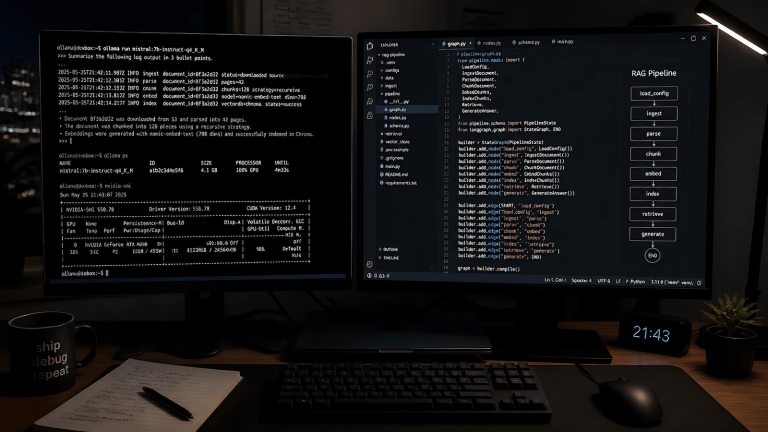
That’s the actual mechanism behind the skill.md pattern I’ve been building into the Workstation project: a tight core prompt under five hundred words that always loads, with additional reference material loaded only when something in the request actually signals it’s needed. Not because smaller is virtuous. Because a small model executes a narrow, well-scoped job reliably, and falls apart on a broad one, in exactly the way a flyweight wins a fight that’s actually sized for a flyweight and loses one that isn’t.
The Twenty Dollars That Paid for Itself Once
I spent twenty dollars on a single Claude subscription month to actually build the local tool I’m describing here. Not twenty dollars a month forever. Twenty dollars, once, to build something that now runs free on hardware I already own, for as long as I keep using it. That’s not a contradiction of the local argument. That’s the argument, working exactly as intended. A one-time cost buying permanent independence beats a smaller recurring cost that never ends, every time, if you actually run the math out past month one.
This isn’t a new idea, either. llama.cpp proved years ago that running real models on hardware people already owned, without a GPU cluster or a cloud bill, was possible at all. I’m not claiming anything revolutionary here. I’m pointing at a fight that’s already been won once, applied to the gate as it exists right now.
The Honest Part
Pay-to-play is real. The big players keep winning the top weight class, and nothing about running Ollama on a modest GPU changes that fact. I’m not going to pretend otherwise, because pretending otherwise is exactly the kind of hype this site exists to push back against.
But the win available to you was never beating Claude. It’s dominating your actual weight class, consistently, on the fights that are actually yours to win. Two out of ten against something bigger than you is still a real win. Stop measuring local models against a heavyweight they were never built to fight, and start building for the fight they can actually take.