Vibe coding, writing software by describing intent to an AI and iterating on its output rather than writing code directly is a real and useful approach for specific contexts. The criticism that it produces developers who can’t read their own code is valid but incomplete. The more precise problem is that vibe coding produces code you don’t fully understand in systems where you’ll eventually need to understand it. Knowing when that matters and when it doesn’t is the practical skill.
The context where vibe coding works without meaningful downside is throwaway or low-stakes code: automation scripts, one-off data processing, prototypes that won’t go to production, and utilities that get used once. The code either works or it doesn’t, you iterate until it does, and deep understanding of the implementation is never required. This is the AI coding workflow use case where the time savings are real and the risk is low.
Where It Breaks
Production systems with state management are where vibe coding reliably produces problems. Code that manages state, tracking what happened previously, maintaining consistency across concurrent operations, handling failure recovery requires understanding the causality chain. An AI can generate code that handles state in a way that looks correct in the happy path and fails in subtle ways under race conditions, partial failure, or unexpected input sequences. You won’t find those failures without understanding what the code is actually doing.
Security-sensitive code is another clear failure domain. Authentication flows, input sanitization, authorization checks, and cryptographic operations all have specific requirements where “looks about right” is not an acceptable standard. AI-generated code that passes tests but breaks in production is documented behavior — the tests the AI writes tend to cover the cases the AI considered, not the cases an attacker would try.
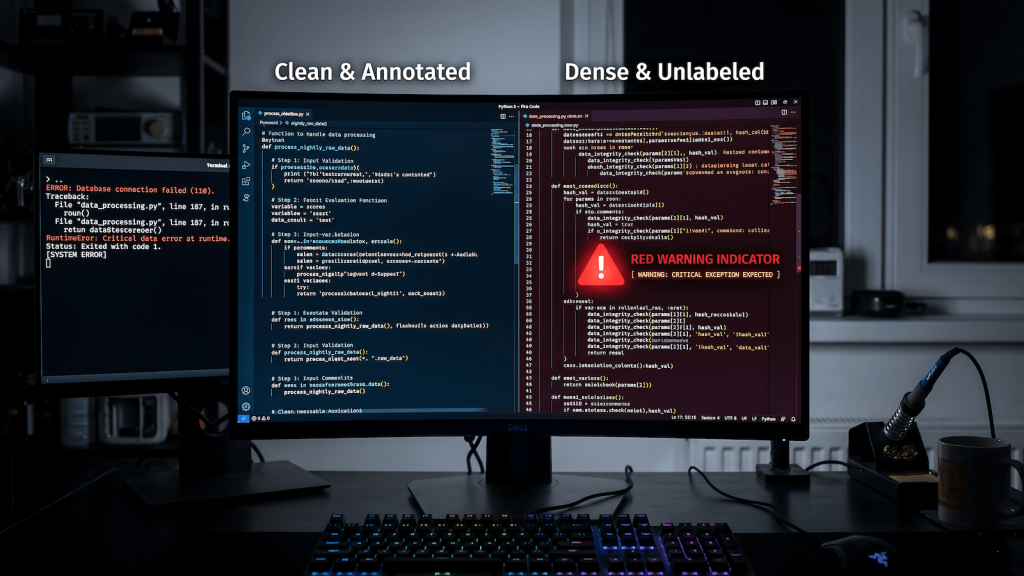
Debugging vibe-coded systems under real failure conditions is the experience that converts most people. When something breaks in a system you built by iterating on AI output, you’re debugging code you don’t have a mental model for. The AI can suggest fixes, and those fixes might work, but you’re in a loop of applying suggestions without building understanding. Each fix introduces new code you don’t fully understand. The system becomes progressively more opaque.
The Practical Boundary
The rule that works in practice: vibe code for isolated, bounded problems where you can fully specify and test the requirements. Write the critical path yourself, or at minimum reconstruct it in your own understanding before shipping. Use AI assistance heavily on the mechanical parts , boilerplate, repetitive patterns, documentation and do the design and architecture thinking yourself.
This isn’t a purity argument. It’s a risk management argument. The Playwright automation work that runs real publishing pipelines requires understanding the code well enough to debug it when Medium changes its DOM structure or a site’s authentication flow updates. Vibe-coded automation breaks at the edges, and fixing it requires understanding what it was trying to do, not just what it was doing.
Vibe coding is a productivity tool, not a development methodology. Use it accordingly.
Focus Keyphrase: vibe coding what breaks SEO Title: Slug: Meta Description: Excerpt: Keywords: Categories: AI Development & Coding, Critical Analysis & Reality Check Curated Tag: Failures & Debugging Tags: Image prompt: . Image alt text: Author Bio: Jaren Cudilla