You’ve trusted a chatbot’s answer without checking it, then an hour later caught yourself manually retyping something AI automation could have handled in ten seconds. Both moments happen in the same week, sometimes the same afternoon, and neither one answers the question actually sitting underneath them. Is this thing making you sharper, or is it quietly teaching you to stop noticing when you’ve stopped thinking. That question is the real one under every “will AI replace me” headline, and none of those headlines actually answer it.
Most of what gets written about AI splits into two lanes. One lane says it’s coming for your job, so brace yourself. The other says it’s magic, so lean in and stop asking questions. Neither lane matches what it’s actually like to use this stuff daily, for years, across real work that has to ship. The honest version sits in the middle, and it’s less dramatic than either extreme, which is probably why nobody writes it.
The Cost of Getting This Wrong Either Way
People who avoid AI outright end up spending real hours on work a tool could have absorbed in minutes. That’s not a hypothetical, it’s a direct time cost that compounds every week it goes unaddressed. Meanwhile people who hand AI their judgment, not just their typing, stop catching the moments where the output is confidently wrong. Both failure modes look like “using AI,” and both are actually a failure to define what the tool is for.
The piece missing from most of this discourse is what what happens when you let AI think for you actually costs, versus what handing it the repetitive, mechanical layer of work actually saves. Those are two completely different transactions, and treating them as the same thing is where most of the anxiety and most of the overtrust both come from.
The Line Every AI Post Repeats Without Proving It
Search “will ai replace humans” and you’ll get the same sentence in a dozen different outfits: AI won’t replace you, people using AI will replace people who don’t. It’s true, and it’s also empty, because none of those posts show what that actually looks like on a Tuesday. They state the conclusion and skip the part where you’d see it happen. That gap is exactly where this post is going to live instead.
A Power Drill Doesn’t Decide What You’re Building
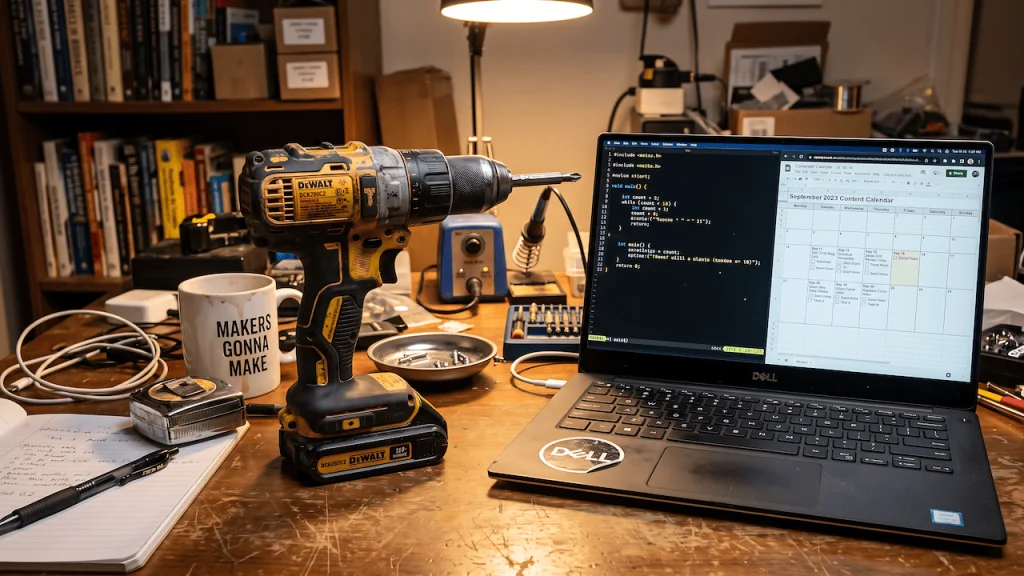
A power drill doesn’t know what angle to cut, what size to drill, or what you’re building. You still have to measure, decide, and hold the thing steady. The drill just does the part that would otherwise eat your afternoon and your wrist. That’s the actual relationship, and it’s a better model than “assistant,” “copilot,” or any of the other words that quietly imply the tool has opinions about your judgment calls.
This isn’t a new idea dressed up, it’s closer to what AI treated like a dirty word gets wrong from the other direction. Calling it a threat assumes it’s making decisions. It isn’t. You are, every time, you’re just doing it faster on the parts that never needed your judgment in the first place.
Where AI Automation Actually Does the Cutting
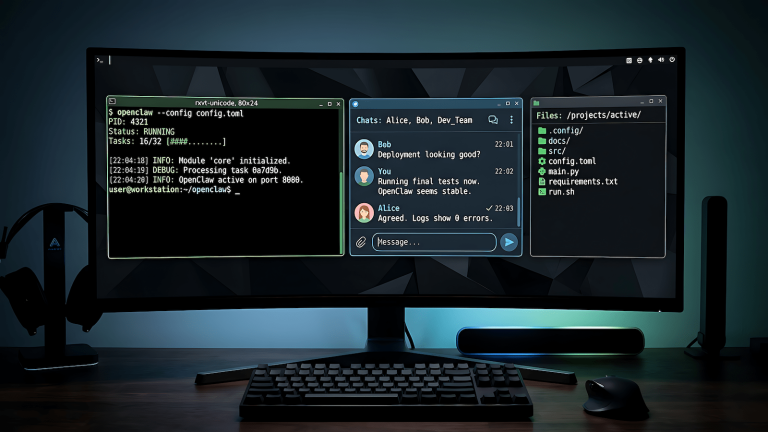
The clearest place this shows up in daily practice is AI automation on the repeatable, mechanical layer of running a content network. Syndicating a published post across platforms, drafting the first pass of a pipeline, keeping a publishing queue moving, none of that requires judgment about whether the underlying idea is good. It requires consistency and speed, which is exactly what AI automation is built for and exactly what a human doing it by hand for the hundredth time starts to get sloppy on.
That’s the actual shape of the setup behind n8n content syndication automation, and it’s worth being specific about what it doesn’t do. It doesn’t decide whether a post is worth writing. It doesn’t decide whether an idea is any good. It moves the finished, judged, approved thing through the mechanical steps faster than doing it by hand ever could, which frees up the hours that judgment actually needs.
Six Sites, One Judgment Call at a Time
Running six sites with six distinct voices used to mean a notebook, a spreadsheet, or just holding a lot of tone rules in your head at once and hoping you didn’t slip. AI didn’t replace that judgment, it made it faster to apply consistently. The call on whether a line sounds like QAJourney or sounds like HealthyForge is still a human call every time, but checking that call against six different voice standards used to be the part that ate the most hours, and now it doesn’t.
That’s the difference between a tool doing the cutting and a tool deciding what gets built. The daily AI workflow that actually holds up over months looks less like delegation and more like this: the mechanical checking gets faster, the actual judgment call stays exactly where it always was.
Catching the Bad Idea Before It Becomes a Bad Week
There’s a version of this that doesn’t get talked about enough, which is AI as a guardrail against your own worse ideas. Everyone has had a idea that felt great at 11pm and would have been a genuine mistake by Tuesday. Having something to argue the idea out loud with, before it turns into wasted hours or a published mistake, is a real function, distinct from either “AI does my thinking” or “AI has no opinion worth hearing.”
This is also where what is engineered AI actually earns its name. Engineered implies structure, constraint, and a human deciding what the system is allowed to do. A tool that occasionally tells you an idea is bad, before you’ve spent a week finding out yourself, is doing exactly that job.
Where This Actually Goes
Computers used to be mystifying. Somebody had to explain what a file was, what a folder was, why you’d want either one. Now nobody explains that, it’s just how a computer works, and the mystification evaporated the moment it became normal infrastructure instead of a novelty. AI automation is somewhere in the middle of that same arc right now, closer to the mystifying end than the invisible one, but headed the same direction.
The tool amplifies judgment. It doesn’t replace it, and it was never going to. The only real question is whether you’re using it to sharpen the calls that matter, or letting it quietly make them for you while you’re not looking. That’s a decision made daily, not a headline answered once.