
Every AI content tool comparison you’ll find online was written by someone who spent a week in a free trial. This one was written by someone who ran six active content sites through these tools over two years, built a local AI drafting pipeline, cut half the stack when it stopped performing, and is still running the rest in production today. The comparison framework here is not features versus features. It’s what actually survived contact with a real content operation.
The AI content tool market looks completely different in 2026 than it did eighteen months ago. Several tools that dominated every “best of” list in 2024 have either pivoted to enterprise pricing, degraded in output quality, or been made redundant by models that are now available locally for free. If you’re using a guide from 2024 to make tool decisions today, you’re working with outdated information. The tools that matter for a solo operator or small content team running real sites are a different set than what the vendor-adjacent roundups recommend, and the evaluation criteria are different too.
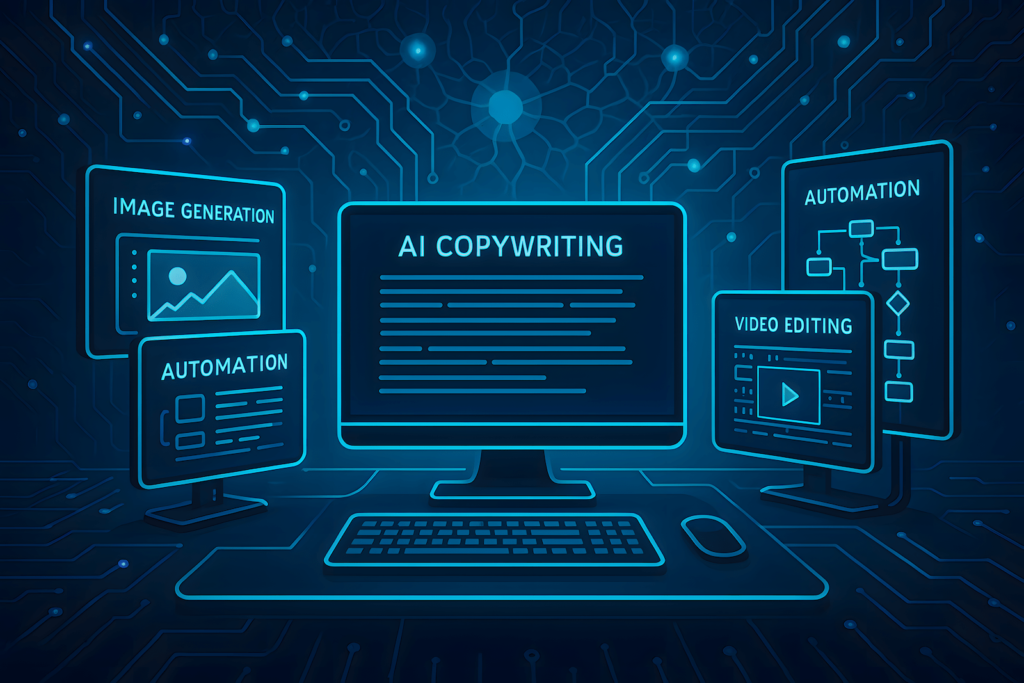
The Framework: What “Works” Actually Means
Before comparing specific tools, the comparison framework needs to be stated explicitly because it determines everything else. A tool that produces fluent output in a demo is not the same as a tool that produces usable output when you’re running it against a real editorial brief, a specific site voice, and a deadline. The tools in this comparison were evaluated against three criteria that vendor reviews consistently skip.
The first is voice consistency across extended output. Most AI writing tools produce acceptable quality on a single short piece. Quality degrades fast when you’re running multiple pieces per week against the same site’s editorial standards. Tools that cannot maintain consistency without constant re-prompting add overhead that offsets any time savings from automation. The second criterion is workflow integration, meaning whether the tool fits into an actual publishing pipeline or requires you to leave your existing process to use it. A tool that lives in a separate tab and produces output you copy-paste into WordPress is a different operational cost than a tool that connects directly to your drafting system. The third criterion is output that survives editing. AI-generated content that reads fluent but requires heavy rewrites to pass an editorial review is not saving time. It’s moving the work. How to tell if an AI tool is a real product or a wrapper covers the structural signals that separate tools worth evaluating from tools that are just API wrappers with a coat of paint.
AI Writing and Drafting Tools: What the Comparison Actually Shows
The honest state of AI writing tools in 2026 is that the model quality gap between products has narrowed significantly. Jasper, Copy.ai, and Writesonic were differentiated in 2024 because they had proprietary fine-tuning on top of GPT-3 era models. That advantage is mostly gone. The underlying models available via API, and now locally via Ollama, produce comparable output quality at a fraction of the cost. What still differentiates the paid platforms is workflow structure, brand voice training, and integrations, not raw generation quality.
Claude is the tool I use for high-judgment content tasks: rewrites, structural analysis, editorial passes on AI-generated first drafts, and anything where the output quality directly affects SEO authority. It handles long context better than any alternative at the same quality tier and produces output that requires significantly less editing to match a defined voice. For the EAI writing stack specifically, local models via Ollama handle first-draft generation on lower-stakes pieces. The local stack detailed in the n8n and Ollama drafting pipeline runs drafts that go through an editorial review before anything touches WordPress. The cost is zero beyond electricity and the hardware is already running anyway.
Jasper is worth considering if you need team-level brand voice enforcement and have the budget. The campaign mode and brand voice training are genuinely useful at scale. The pricing is hard to justify for a solo operator when the underlying model quality is now matched by tools that cost significantly less. Copy.ai has pivoted heavily toward enterprise sales automation and is effectively a different product than it was in 2024. If you’re evaluating it as a writing tool for content sites, the current version is not what most reviews are describing.
Automation and Pipeline Tools: Where the Real Leverage Is
The tools that made the biggest difference to the content operation were not writing tools. They were pipeline tools. The writing tool produces a draft. The pipeline tool determines whether that draft moves efficiently from brief to published post or gets stuck in manual handoffs that take longer than writing the post would have.
n8n is the backbone of the current content automation stack. It connects Ollama for draft generation, handles file output, manages the syndication workflow for six sites, and connects to Discord for the Alfred agent system. The multi-model writing stack post covers how different models get assigned to different task types within the pipeline. n8n is free and self-hosted, which means the automation layer costs nothing beyond the time to build it. The learning curve is real but the payoff at scale is significant. Zapier and Make are valid alternatives for teams that don’t want to manage infrastructure, but the cost compounds fast once you’re running high-volume workflows.
The automation tool that got cut was a cloud-based social posting service that was supposed to eliminate the manual syndication step. It got cut because it published syndicated content before the canonical post was indexed, which created a competition problem between the source post and the syndicated versions. The time savings were real. The downstream SEO cost was larger. This is the category of failure that tool reviews don’t document because reviewers don’t run the tools long enough to hit the edge cases. Why I stopped letting AI push directly to platforms covers the specific failure modes in detail.
Image and Visual Tools: The Practical Tier
Image generation is the category where the SERP advice is most disconnected from practical use. MidJourney produces the highest quality aesthetic output in the market. It is also Discord-only with no API, no direct integration with any publishing pipeline, and pricing that has increased significantly since 2024. For a solo content operation running six sites, the operational overhead of Discord-based image generation is not justified unless visual quality is the primary competitive differentiator for the site.
The practical tier for content site imagery is Canva’s AI image tools for social graphics and blog visuals, combined with locally available image tools for featured images. The AI image compression tools benchmark covers the compression side of the visual workflow, which is where most content sites lose performance without realizing it. Image quality and image optimization are different problems, and most AI tool comparisons only cover generation without addressing what happens after the image is generated.
DALL-E 3 inside ChatGPT is the most accessible general-purpose image tool for content creators who don’t want to manage a separate image generation workflow. Output quality is consistent enough for blog featured images and social previews. It is not competitive with MidJourney for brand-defining hero visuals, but for functional content site imagery it gets the job done without adding a separate subscription or workflow step.
What Got Cut and Why
The tools that did not survive the two-year operational test fall into two categories. The first is tools that produced good output in demos and degraded under real workload conditions. Writesonic is the clearest example. The first output from a fresh prompt is often acceptable. Quality drops consistently on subsequent outputs in the same session, and the output requires more editing passes than writing the piece from scratch would take. The time savings calculation that looks good in a free trial does not hold at operational volume.
The second category is tools that solved a problem I didn’t actually have. Several content calendar and planning AI tools made it into the stack in 2024 and got cut within three months. They added a planning layer on top of a planning process that was already working. The AI planning layer produced more planning overhead, not less. This is the category failure that is hardest to diagnose because the tool is technically working correctly. It’s just solving a problem that wasn’t the actual bottleneck. What AI replaced in my workflow documents the full list of what made it and what didn’t, including the specific reasoning for each cut.
The Comparison That Actually Matters
The AI content tools comparison that’s useful in 2026 is not tool A versus tool B on a feature matrix. It’s which tool category addresses your actual bottleneck. If you’re spending most of your time on first drafts, a writing tool solves the problem. If you’re spending most of your time on manual handoffs between steps, a pipeline tool solves the problem. If you’re spending most of your time on editorial review, neither tool category solves the problem and the issue is with how AI is being positioned in the workflow.
The full breakdown of how the current AI workflow is structured covers which tools sit at which stage and why. The comparison in this post is a layer above that: an assessment of the tool categories and which products within each category have held up under real operational conditions. The answer is almost always fewer tools than the listicles recommend, running at a deeper level of integration, with a human review layer that doesn’t get removed because a tool produces fluent output.