
People treat fragmentation like it’s a disease.
They hear “fragmented system” and picture slow machines, messy codebases, and tech debt. Then they bring that same mental model into AI work and try to “solve it” by asking the model to generate an entire app, refactor everything, or fix a system end-to-end.
That’s how you get AI outputs that look productive and still waste your day.
Fragmentation is not the problem.
Losing fragmentation is the problem.
Because the moment you remove boundaries, you remove causality. And once causality is gone, AI doesn’t speed you up. It just spreads changes across surfaces you can’t control.
This is the same core failure pattern you’ve already called out across multiple posts: AI overcomplicates simple tasks, passes tests but breaks real usage, and turns “fast” work into a debugging tax. Fragmentation is the label that ties all of those symptoms together.
AI Fails at Big Systems for the Same Reason Humans Do
If you’ve ever shipped a big refactor that “should be safe,” you already know the truth: big, unscoped changes lie.
AI just lies faster.
When someone asks for “the whole system,” the model can’t preserve what matters because you didn’t tell it what must not move. It will happily trade stability for completeness. That’s not malice. It’s the only move available when you’ve made everything mutable.
That’s why you can get code that looks logically correct, even passes a test suite, and still detonates in the real world. You already documented that exact failure mode in AI-generated code passes tests but breaks production. The model produced something that matched expectations, not something that matched reality under pressure.
That is a fragmentation issue.
Because when changes are not compartmentalized, a “fix” doesn’t stay a fix. It becomes a system rewrite.
Fragmentation Preserves Causality, Which AI Loses First
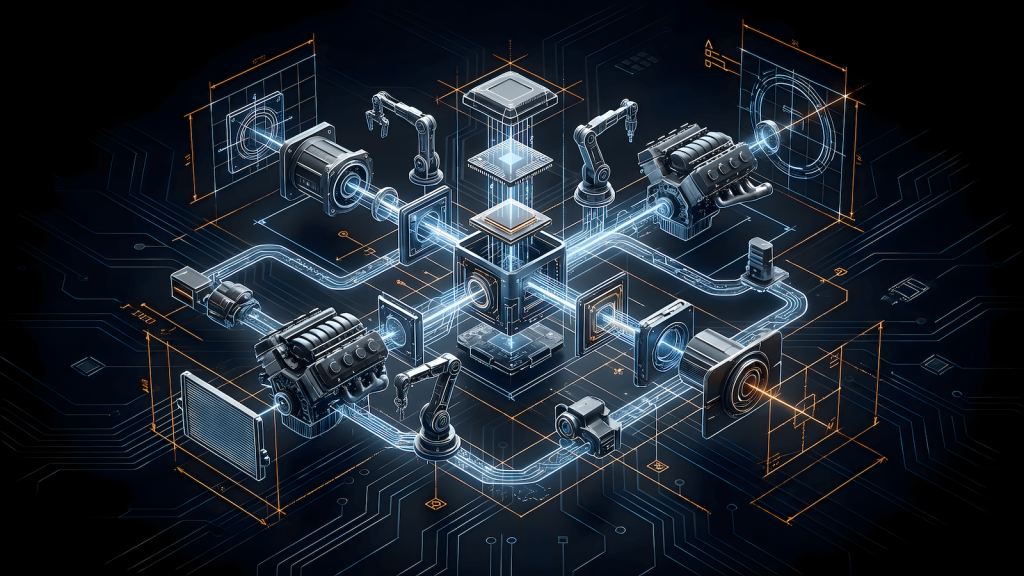
Fragmentation is how you keep cause-and-effect readable.
A well-fragmented workflow has:
- small surfaces
- clear ownership
- bounded change
- obvious rollback points
The reason fragmentation works is boring but brutal:
small changes are debuggable
big changes are narrative
AI lives and dies by that.
When you fragment the task, you can validate the result. When you don’t, you are forced to trust the output, and trust is exactly what breaks first once the model starts “improving” things you didn’t ask it to touch.
This is the same mechanic you described in multiple workflow posts: you don’t win by asking for cleverer prompts, you win by enforcing structure. That’s why prompt engineering is just asking better questions works as a principle, but only when the question is scoped like an engineer would scope work.
Fragmentation is how you scope.
The Anti-BS Workflow: Scaffold, Then Fragment
If you want to build with AI without inheriting chaos, the workflow is simple:
- Use AI for boilerplate (UI scaffold, folder layout, initial skeleton).
- Add features as isolated units (a new file, a new module, a narrow function).
- Validate locally.
- Only then integrate.
That’s not prompt magic. That’s architecture.
It’s also why the “AI can build an app in 10 minutes” crowd keeps getting trapped. Yes, you can get something that runs. But when you try to change anything, you discover you didn’t build a system. You generated one. And now the cost comes due.
This is the same reason “AI speed” often feels like fake progress. You covered the human version of this trap in vibe coding with AI: the tool gives you motion, and then you spend the next hours debugging prompts, intent, and unintended rewrites.
Fragmentation is how you stop vibe coding from turning into maintenance debt.
Why AI Overcomplicates Simple Tasks
This one is not mysterious.
AI overcomplicates simple tasks when the task has no hard boundary. If you leave the door open, the model walks into every room.
That’s the entire point of why AI overcomplicates simple tasks. The model introduces packages, variables, abstractions, and “clean architecture” because you didn’t constrain the solution to what is actually needed.
Fragmentation is the constraint.
If you ask for:
- a single function
- a single file change
- a single behavior improvement
you get something you can verify.
If you ask for:
- a redesign
- a refactor
- “make it better”
you get scope creep disguised as helpfulness.
“Flow” Problems Are Fragmentation Problems
You’ve also written about AI as a flow breaker. That’s not just productivity talk. It’s a systems signal.
When flow breaks, it’s often because boundaries collapsed:
- the model changed more than you expected
- you can’t isolate where the failure came from
- you’re reading outputs instead of building confidence
That’s why posts like Why voice input produces better AI output than prompts matter. You’re not arguing “voice is better.” You’re arguing that typed prompts often strip the context and reasoning that keeps intent coherent. Once intent fragments, outputs fragment. Then you waste time “fixing” something that was never anchored.
Different entry point, same disease: lost causality due to lost structure.
AI Works Better in Testing Than in Production for One Reason
Testing is fragmented by design.
You isolate:
- behaviors
- paths
- edge cases
- expected outputs
AI thrives there because the boundaries are already enforced.
Production is messy because everything touches everything. That’s why AI chatbots “work” in a controlled demo and then melt down under real customer variability, as you’ve shown in AI chatbots in customer service: testing vs production.
In a fragmented environment, AI can be evaluated.
In an entangled environment, AI becomes a liability.
That’s not anti-AI. That’s engineering.
The Point
Fragmentation is not what makes systems weak.
It’s what makes systems survivable.
AI doesn’t need to be smarter for this to improve. The user needs to stop feeding it tasks that remove structure and then acting surprised when the output behaves like a system with no boundaries.
If you want AI to be reliable:
- fragment the work
- fragment the changes
- fragment the review
- fragment the validation
You don’t “build the whole thing.”
You build a system the way real systems stay alive: in parts.
Optional deeper layer (origin, not redirect)
If you want the physical, non-AI version of the same principle on how fragmentation works in storage, operating systems, and why “fragmented” is often the reason systems stay usable at all, I wrote that out in Fragmentation Is How Systems Stay Alive. Read it if you want the intuition behind the instinct. The AI workflow still stands without it.

Builds with AI the same way he builds systems: by breaking them into parts that can fail without taking everything down.
Uses fragmentation deliberately to expose where models hallucinate, overreach, or silently rewrite intent.
Runs EngineeredAI.net, a working log of how AI behaves inside real production constraints not demos, not benchmarks, not vibes.
Focuses on context control, instruction fidelity, and knowing when not to let the model think for you.

Pingback: Why QA Fails Without Fragmentation (and How Fragmentation Protects Systems) - QAJourney