Here’s something we’ve noticed: You can post a genuinely helpful comment on Reddit that solves someone’s problem, but if someone suspects you used AI to help write it? Downvoted. It doesn’t matter if the information is accurate, useful, or exactly what the OP needed. If it’s “AI-assisted,” it’s suddenly worthless.
AI-generated images get flagged and dismissed. Mention you used ChatGPT to debug your code or draft an email, and watch people question your intelligence.
When did using tools become shameful?
The EngineeredAI Stance: Tool, Not Replacement
Let’s get something straight: AI is a tool, not a replacement. And the fear surrounding it reveals more about our anxieties than about the technology itself.
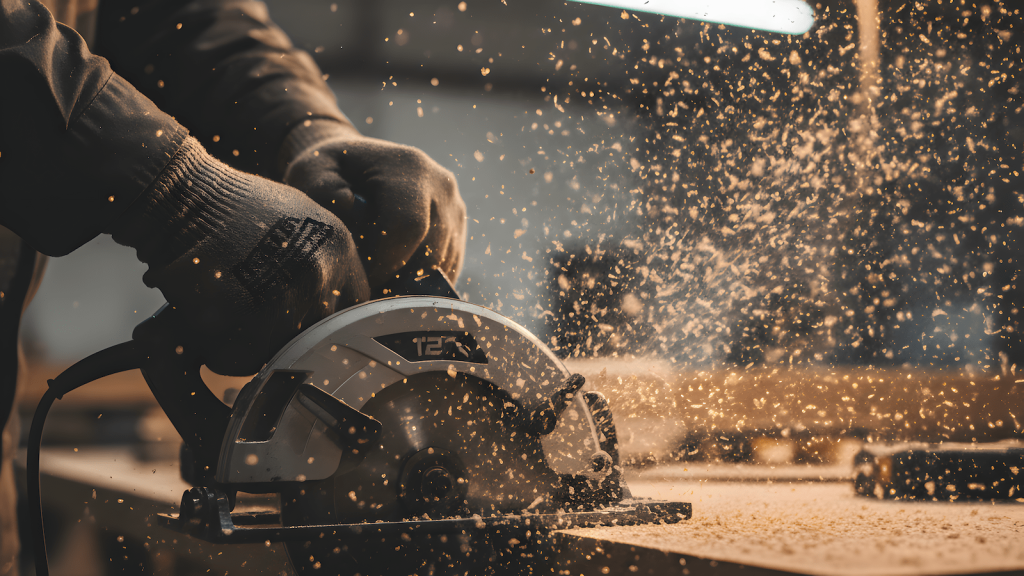
Think of it this way, a power saw versus a manual saw. The power saw is faster and more efficient. Does that make the carpenter less skilled? No. The carpenter still needs to:
- Know what they’re building
- Measure correctly
- Understand the material
- Make critical decisions
- Take responsibility for the result
And here’s the reality: If you put your hand near the cutline, power saw or manual saw, you’re getting cut. The tool doesn’t eliminate the need for skill, judgment, and caution. It amplifies what you can do with them.
How We Actually Use AI at EngineeredAI
We don’t just talk about AI as a tool. We use it as one. Here’s proof:
Prompt Engineering & Better Questions
We wrote a complete guide on Prompt Engineering that breaks down the core truth: AI is just about asking better questions. But you need to know what questions to ask. The AI doesn’t create your strategy. It helps you execute it faster.
Content Creation & SEO
We use AI to help research and draft content, but every article is verified by real experience. Our piece on AI-Generated SEO Content is blunt: AI without human judgment produces garbage. AI with expertise produces value. We also wrote about why clarity and context matter more than AI tricks for ranking.
AI vs Traditional Coding
Our article on AI vs Traditional Coding explains when AI helps and when traditional skills are essential. Spoiler: you need both. AI accelerates. Humans direct.
Real Tool Comparisons
We tested actual AI tools, not for affiliate money, but to see what works. Check out our AI Content Tools Comparison where we ran real workflows and reported honest results. We even benchmarked AI Image Compression Tools using a 6144×4096 image to see which ones actually delivered.
Practical AI Applications
We even created 39 production-tested AI prompts for Barangay procurement under Philippine law (RA 9184). AI generated compliant documents, but only because we knew the regulations and structured the prompts correctly.
The Hypocrisy We Need to Talk About
Let’s address the elephant in the room: The anti-AI gatekeeping is inconsistent and often elitist.
Example 1: Reddit Comments
Someone asks for help. You use AI to research, verify information, and craft a clear, helpful response. You post it. It solves their problem. But if someone detects “AI tone”? Downvoted and dismissed, even though the information is correct and genuinely helpful.
Question: Would they have downvoted if you’d used Google, Stack Overflow, or a textbook to help write the same comment? All of those are tools too.
Example 2: “You Used AI, So You Don’t Really Know It”
Here’s the truth bomb: You can master something using AI assistance even without traditional qualifications.
Used AI to learn coding? You still wrote, debugged, and understood the code. Used AI to help write documentation? You still structured the ideas and made decisions. Used AI for image composition? You still directed the vision and refined the output.
The tool helped you learn faster and do more, but you still did the work.
Example 3: AI Images Are “Fake Art”
Photography was once dismissed as “not real art” because it didn’t require painting skills. Digital art faced the same criticism. Now AI art is the target.
The pattern? New tools always threaten gatekeepers who built their identity around mastering the old ones.
Why the Fear? Why the Hate?
The anxiety around AI comes from several places:
1. Job Displacement Fears
This one’s real and valid. But here’s the thing: Tools have always changed work. The printing press, the assembly line, the computer. Each one disrupted jobs. The question isn’t “Will AI change things?” It’s “How do we adapt and use it as an advantage?”
2. Gatekeeping Disguised as Standards
Some of the pushback isn’t about quality. It’s about protecting traditional barriers to entry. If someone can use AI to learn programming in 6 months instead of 4 years of CS education, that threatens the perceived value of those 4 years.
3. The “Authenticity” Myth
People romanticize struggle. If something came “too easily,” it must be less valid. But efficiency isn’t cheating. Using a calculator doesn’t make you bad at math. Using spell-check doesn’t make you illiterate.
4. Misunderstanding What AI Does
AI doesn’t think for you. It doesn’t create from nothing. It’s pattern recognition and generation based on your input. You still provide the direction, context, judgment, refinement, and responsibility.
What AI Actually Is (And Isn’t)
AI is a force multiplier, not a replacement:
It’s a research assistant, not a researcher. It’s a draft generator, not a writer. It’s a code helper, not a software architect. It’s an image generator, not an art director. It’s a data analyzer, not a strategist.
The human still sets the vision, applies judgment, adds nuance, and owns the outcome.
The Real Danger
Here’s what we should actually worry about: Not using tools responsibly.
Just like that power saw, the danger isn’t in having it. It’s in not learning how to use it properly, not understanding its limitations, blindly trusting output without verification, and removing human judgment from the process.
The danger is misuse, not use.
The Bottom Line
At engineeredAI, we believe AI should augment human capability, not replace it.
Power tools didn’t eliminate craftsmanship. They elevated it. Carpenters can now focus on design, precision, and artistry instead of spending all day on manual cutting.
AI should do the same for knowledge work.
The real question isn’t “Should we use AI?” It’s “How do we use it well?”
To the AI Critics:
If someone posts helpful information, solves a problem, or creates something valuable, does it really matter if they used AI as a tool? Or are we just gatekeeping for the sake of it?
Let’s judge the output, not the tools used to create it.
Learn More About Our Approach
EngineeredAI.net – Real AI use cases, practical strategies, and honest tool reviews
QAJourney.net – Tactical QA guides and automation frameworks (with some AI-assisted workflows)
We document how we actually use AI, not as magic, but as a tool that makes real work faster and better.
What’s your experience? Have you been criticized for using AI, even when it helped you do better work? Let’s discuss.