The Quiet Migration Everyone Is Feeling But Few Are Questioning
Something is happening to how people search, and the data is starting to catch up with what practitioners are already living. HubSpot’s consumer research found that of people already using AI search, 79% said the experience was better than traditional search. That number isn’t surprising to anyone who has made the switch. Now this isn’t an AI search vs Google search, it’s a trust problem.
If you talk to people who work in tech, content, or research, you’ll hear the same thing: they’ve mostly stopped using Google.
Not completely. Google still gets opened for quick lookups, maps, local results, things where speed matters more than depth. But for anything that requires actual thinking, research, brainstorming, exploring a topic, understanding something new, AI search has quietly become the default.
It happened gradually. Then all at once.
And it makes complete sense why.
Why AI Search Feels Better
Traditional search engines require you to already know what you’re looking for. You need the right keywords. You need to understand how search algorithms rank results. You need to open five tabs, skim each one, synthesize the information yourself, and figure out which sources to trust.
AI search flips that entirely. You just describe what you’re thinking about, naturally, conversationally, even vaguely, and the AI figures out what you mean, finds relevant information, and hands you a synthesized answer. No keyword engineering. No tab juggling. No manual synthesis.
For someone researching across multiple topics, managing multiple projects, or just trying to move fast, this isn’t just convenient. It’s a fundamentally better experience. The cognitive load drops significantly. You can go from a vague idea to a concrete answer in seconds.
And crucially, it feels smarter. More like talking to a knowledgeable colleague than querying a database.
That feeling is real. AI search genuinely is better at understanding intent. But that same feeling, that sense of intelligent, trustworthy assistance, is also where the risk quietly enters.
The Trust Problem
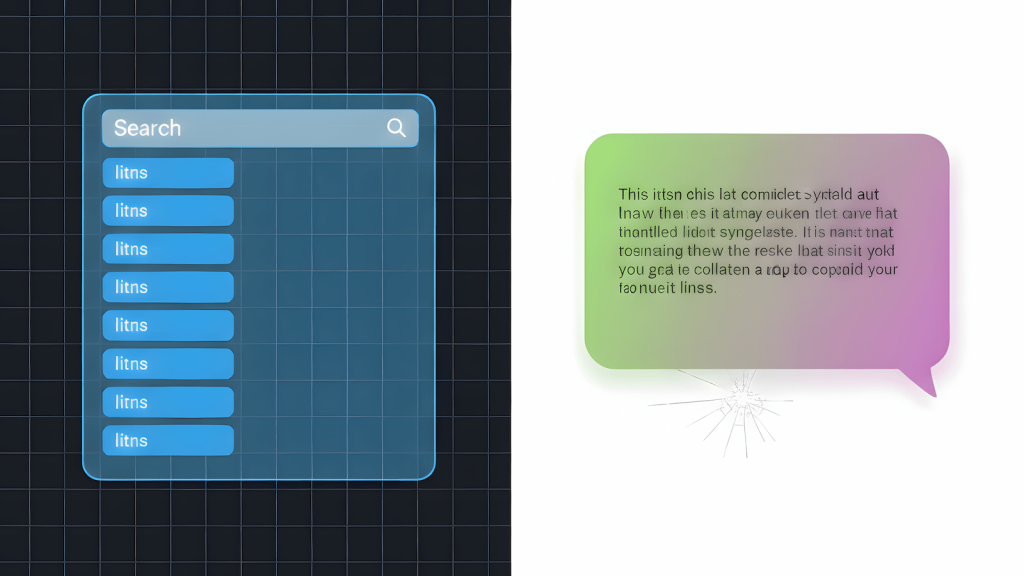
When you search Google and get 10 blue links, you know exactly what you’re working with. You can see there’s a page 2. You can judge source quality by the domain. You understand instinctively that you’re looking at a filtered slice of the web and that more exists beyond what’s shown.
AI search doesn’t give you that transparency. It gives you an answer. A confident, well-structured, conversational answer that sounds like it came from someone who read everything and gave you the best of it.
And because it sounds that way, you treat it that way.
The early habits people developed with Google, cross-referencing sources, checking page 2, being skeptical of the first result, those habits don’t transfer naturally to AI search. The interface doesn’t invite skepticism. It invites trust.
That trust is mostly warranted. But mostly is doing a lot of work in that sentence.
What’s Actually Happening Under the Hood
Here’s the part that doesn’t get explained to everyday AI search users: the answer you’re getting is built on a surprisingly narrow foundation.
AI search tools typically query a limited set of results, often the top 10 from a search engine. Beyond that, the web doesn’t exist for that query. Then, when the AI fetches content from those results, it reads each page up to a certain limit. Content that falls below that limit on any given page simply isn’t processed. The architecture around how AI fetches and reads web content including how self-imposed token limits work specifically introduces invisible truncation at multiple points in the pipeline, and the output gives you no signal that any of this happened.
You get a complete-sounding answer assembled from an incomplete picture of the web.
For most queries, this doesn’t matter much. The relevant information is usually near the top of the top results. But for nuanced research, niche topics, or anything where the critical detail might live deeper in a page or further down the search results, the gap between what AI searched and what actually exists can be significant.
The Compounding Danger
The migration from Google to AI search wouldn’t be a problem if people maintained the same verification habits they had with traditional search. But they don’t, and it’s not because they’re careless. It’s because the interface doesn’t signal that verification is needed.
When Google gives you 10 links, the implicit message is: here are some options, go investigate. When AI gives you a synthesized paragraph, the implicit message is: here is the answer.
That shift in framing changes behavior. People read the AI answer, feel satisfied, and move on. They make decisions, about their content strategy, their research conclusions, their understanding of a topic, based on output that was never designed to be exhaustive.
And the more they use AI search without problems, the more that trust compounds. Each successful interaction reinforces the habit. The occasions where the AI missed something critical go unnoticed, not because the user was fooled, but because they had no way of knowing there was something to notice.
This Isn’t Anti-AI
It’s worth being clear: this isn’t an argument against AI search. The shift toward AI-assisted research is real, largely positive, and not going to reverse. The experience genuinely is better for a wide range of use cases and the efficiency gains are real.
This is an argument for AI search growing into what it’s being used as.
Right now there’s a gap between how AI search is architected and how people are actually relying on it. The architecture was designed for a tool that assists research. People are using it as a tool that conducts research. Those are different things, and the difference matters.
As AI search becomes the primary research interface for more people, not just tech workers but students, professionals, decision-makers across every field, the invisible limits baked into how it fetches, reads, and synthesizes information become a public epistemology problem, not just a product design issue.
The good news is that closing this gap is entirely achievable. The technology exists. The context windows are large enough. What’s needed is architectural intentionality around search-specific tasks, deeper fetching, broader result sets, and most importantly, transparency signals that tell users when they’re working with a partial picture.
That’s a reasonable ask. And it’s worth making clearly.
What You Can Do in the Meantime
Until AI search architecture evolves to match how people are actually using it, a few habits protect you without giving up the efficiency gains that make AI search valuable.
Use AI search for breadth and brainstorming. It’s genuinely excellent at helping you explore a topic, generate angles, and identify what you don’t know yet. Then use targeted traditional search to go deep on the specific details that matter most.
When AI gives you a confident answer on something consequential, ask it to show its sources. Not because the AI is untrustworthy, but because seeing the source set tells you how narrow or broad the search foundation was.
If you’re researching your own content or sites, verify manually. AI search has specific blind spots around content that lives lower on long pages, something worth understanding before drawing conclusions about your own material.
And stay appropriately skeptical, not in a way that undermines the efficiency gains, but in the same way a good researcher stays skeptical of any single source, no matter how authoritative it sounds.
The Bottom Line
The migration from Google search to AI search is one of the most significant behavioral shifts in how people access information in the last decade. It’s happening quietly, personally, and faster than most people realize.
The risk isn’t that AI search is bad. The risk is that it’s good enough to earn deep trust before it’s complete enough to deserve it fully.
That gap, between the trust users are extending and the architectural reality of how AI search works, is the thing worth paying attention to right now.
EngineeredAI.net covers no-hype AI insights for builders, testers, and engineers navigating the real landscape of these tools. If this made you think differently about how you search, that’s exactly the point.